How Georgetown Gym-Goers Can Train Smarter and Recover Better

As more people in Georgetown and the surrounding Halton Hills community become active through strength training, recreational sports, and general fitness, one pattern shows up consistently in both gym and clinic settings: progress depends just as much on recovery as it does on training.
Training Creates Stress. Recovery Creates Adaptation.
Every workout places stress on the body. Strength training, in particular, creates small, controlled amounts of muscle and connective tissue breakdown. That stress is not a problem, it is the signal the body uses to adapt and get stronger.
The adaptation, however, does not happen during the workout. It happens afterward, during recovery.
Without enough recovery time, the body may begin to show signs such as:
Persistent muscle tightness
Reduced range of motion
Slower performance progress
Lingering soreness
Increased risk of overuse discomfort
These are often early indicators that the balance between training load and recovery has shifted.
A Trainer’s Perspective: Building Capacity, Not Just Intensity
From a training standpoint, the goal is not simply to do more, it is to build capacity over time.
AtGlen Fitness Studio, this typically involves:
Gradual progression of load and intensity
Emphasis on movement quality and control
Structured recovery days
Incorporation of mobility work
Avoiding sudden spikes in training volume
A well-designed program should leave room for the body to recover and adapt, not just accumulate fatigue. When recovery is built into the plan, consistency improves and injury risk tends to decrease.
A Chiropractic Perspective: How Movement Quality Fits In
From a chiropractic perspective, movement is not just about strength, it is about how efficiently the body moves through space.
In active individuals, it is common to see restrictions develop in areas such as:
Hips
Thoracic spine
Shoulders
Lower back
These restrictions do not always cause immediate pain, but they can influence how the body distributes load during exercise. Over time, this may contribute to compensation patterns or recurring tightness.
Chiropractic care in this context is often focused on supporting joint mobility and helping restore more efficient movement patterns, particularly for individuals who train regularly or participate in seasonal sports.
The Role of Massage Therapy in Recovery
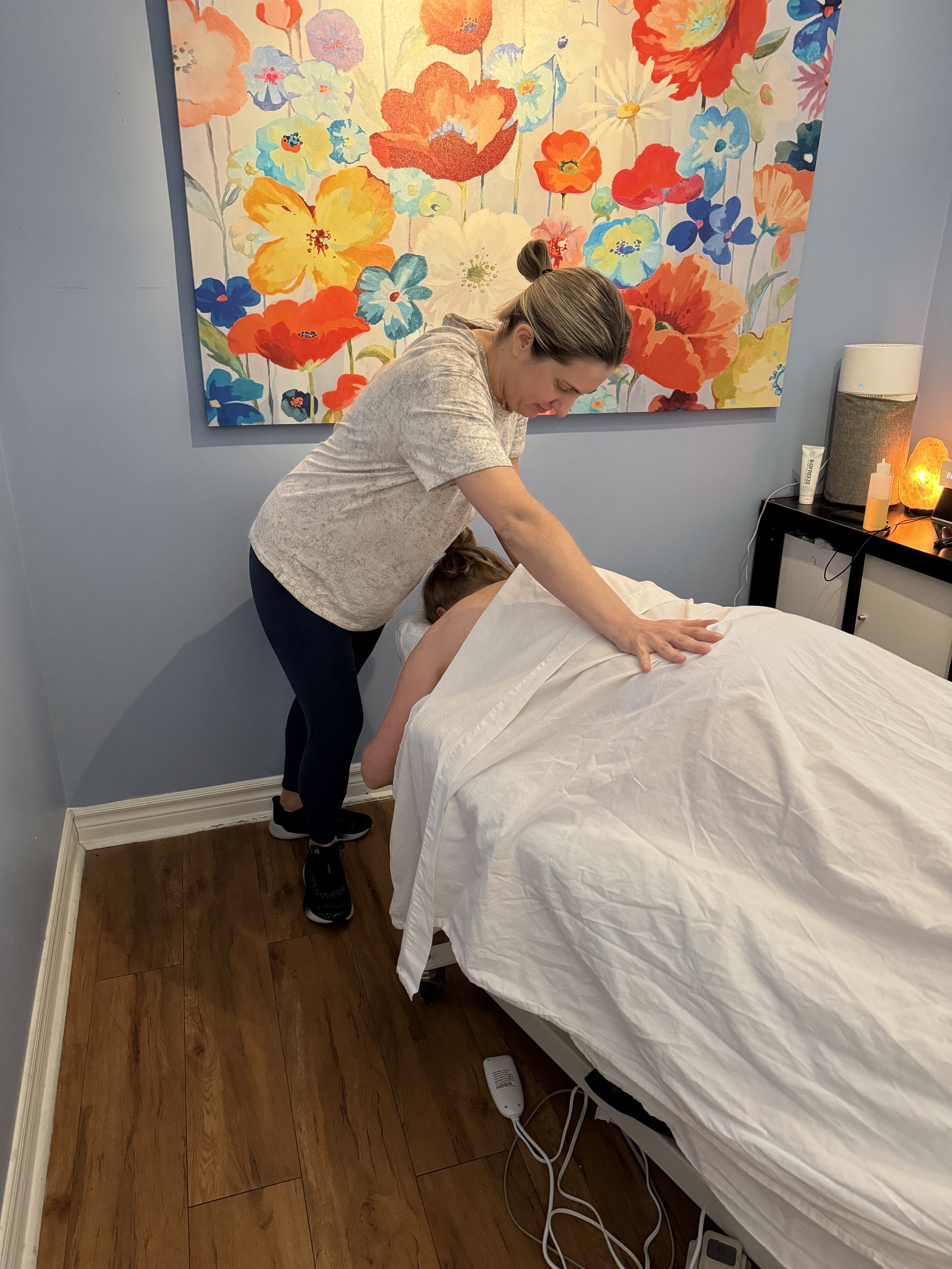
Massage therapy is often used by active individuals as part of their recovery routine, particularly when training volume increases.
Physiologically, massage may support:
Reduced muscular tension
Improved circulation
Temporary relief of tight or overworked areas
General recovery between training sessions
Rather than being viewed as an occasional treatment, it is often most effective when used consistently alongside an active lifestyle, especially during periods of increased training or sport participation.
Where People Commonly Run Into Issues
In both training and clinical environments, some of the most common patterns seen in active adults include:
Tight hips from prolonged sitting and lifting
Shoulder stiffness from upper body training or posture
Low back discomfort during or after workouts
Neck tension related to daily posture or stress
Muscle soreness that lingers longer than expected
In many cases, these are not isolated problems, but cumulative responses to training load, daily habits, and recovery timing.
Practical Ways to Support Recovery
A few simple, consistent habits can make a meaningful difference in how the body responds to training:
1. Treat recovery as part of training
Rest days and lighter sessions are not breaks from progress, they are part of it.
2. Warm up with intention
Preparing the body before activity can improve movement quality and reduce unnecessary strain.
3. Pay attention to recurring tightness
Ongoing stiffness in the same areas is often a sign of movement or recovery imbalance.
4. Prioritize mobility alongside strength
Strength without mobility can limit long-term movement efficiency.
5. Avoid sudden increases in activity
Large jumps in training volume are a common trigger for overuse symptoms.
A Shared Focus on Movement
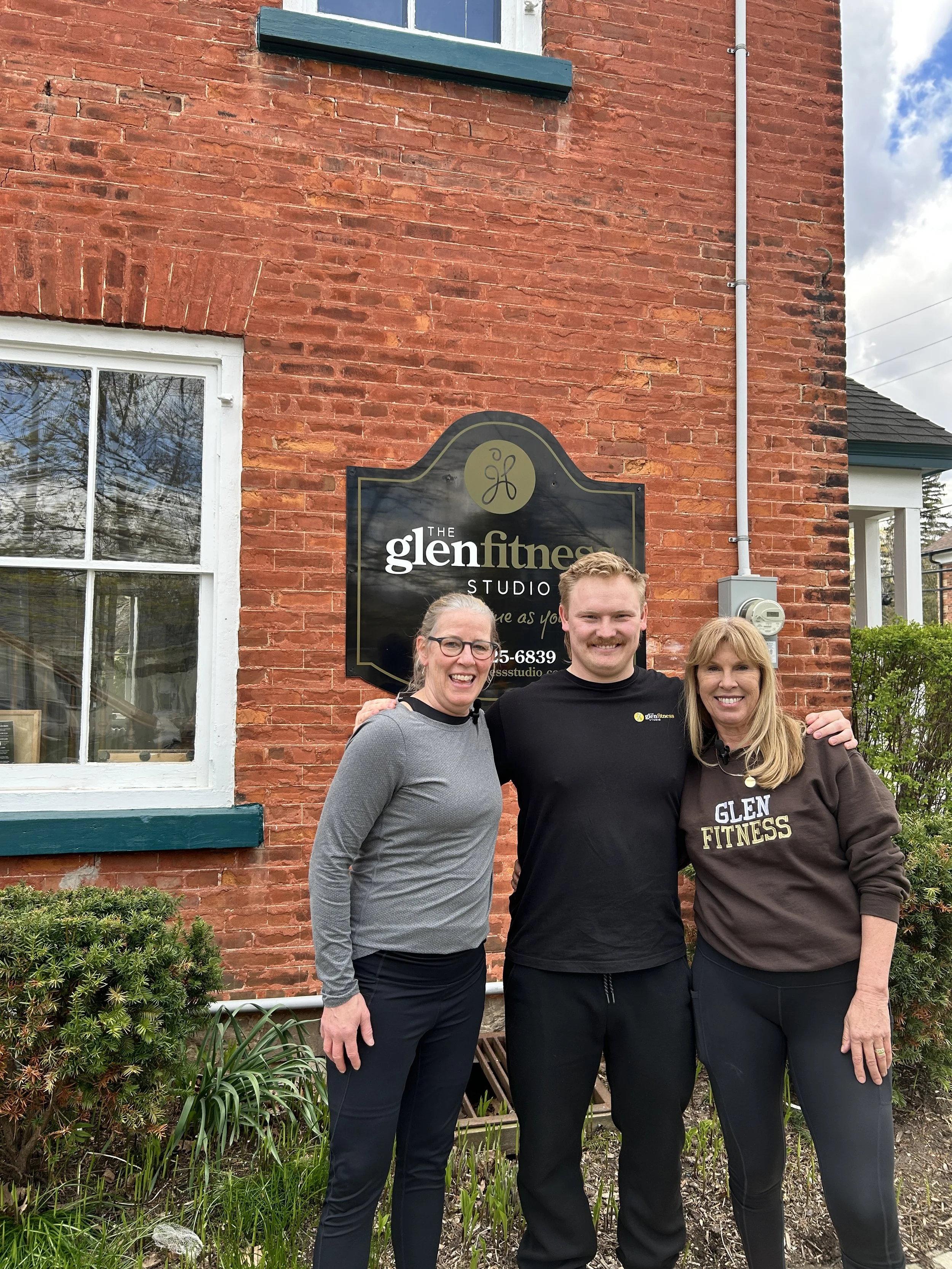
While fitness training and clinical care often operate in different environments, they are ultimately working toward the same outcome: helping people move well and stay active over time.
In a community like Georgetown, where many residents are balancing work, family, and active lifestyles, the ability to train consistently without interruption is often more valuable than short-term intensity.
Strength training builds capacity. Recovery maintains it. Both are necessary for long-term progress.
If you are training regularly in Georgetown or Halton Hills and want to better understand how recovery fits into your routine, it may be helpful to look at both sides of the equation, how you train, and how your body restores itself between sessions.
Glen Fitness Studio and Move Activity & Motion Clinic each support different parts of that process, helping you stay consistent, move well, and continue doing the activities you enjoy over time.
If you are interested in learning more about how training and recovery can work together, you can connect with either team below.
Glen Fitness Studio
📍 511 Main St, Georgetown, ON L7G 3S9 📞 (647) 525-6839 📧 barb@glenfitness.ca 🌐https://glenfitness.ca/
Move Activity & Motion Clinic
📍 116 Guelph St Unit 1, Georgetown, ON L7G 4A3 📞 (905) 702-1072 📧 info@moveamc.com 🌐https://www.moveamc.com/contact